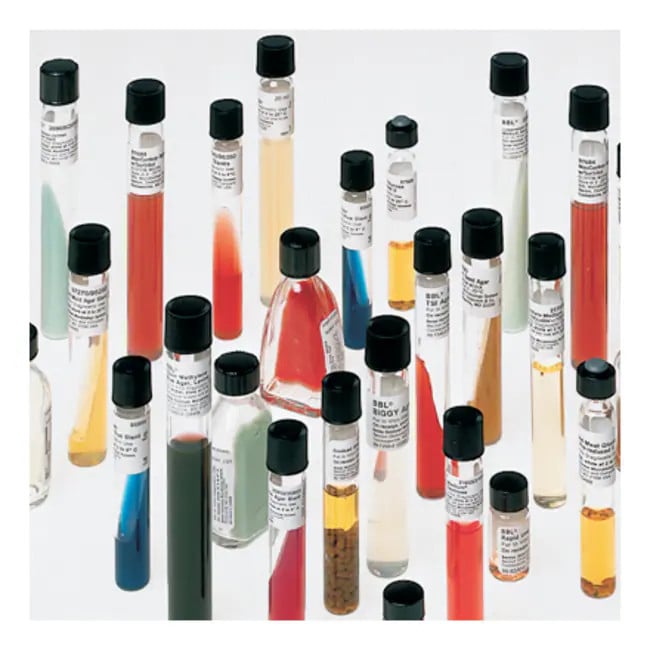
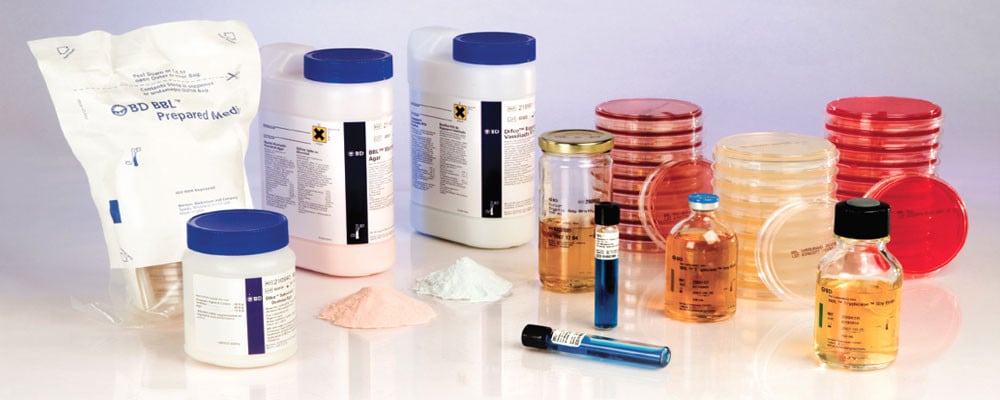
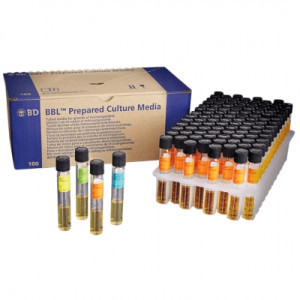
BD BBL Prepared Media Trypticase Soy Agar with 5% Sheep Blood provides a broad-spectrum base for the growth of a variety of microorganisms. Enriched with 5% sheep blood, this medium facilitates the cultivation of both fastidious and non-fastidious organisms, supporting detailed hemolytic analysis crucial for clinical investigations. Its application spans clinical laboratories, research institutions, and educational settings, offering a trusted medium for bacterial culture.
The pre-poured plates are convenient and ready-to-use, eliminating the need for preparation and reducing potential environmental contamination. This saves valuable time in diagnostic laboratories and helps streamline workflow. These plates are designed to be consistent in quality, supporting precise and reliable laboratory results. With excellent clarity and robust growth support, they enhance visibility and accuracy in identifying pathogenic strains critical for effective diagnostics.
BD BBL Prepared Media Trypticase Soy Agar with 5% Sheep Blood provides a broad-spectrum base for the growth of a variety of microorganisms. Enriched with 5% sheep blood, this medium facilitates the cultivation of both fastidious and non-fastidious organisms, supporting detailed hemolytic analysis crucial for clinical investigations. Its application spans clinical laboratories, research institutions, and educational settings, offering a trusted medium for bacterial culture.
The pre-poured plates are convenient and ready-to-use, eliminating the need for preparation and reducing potential environmental contamination. This saves valuable time in diagnostic laboratories and helps streamline workflow. These plates are designed to be consistent in quality, supporting precise and reliable laboratory results. With excellent clarity and robust growth support, they enhance visibility and accuracy in identifying pathogenic strains critical for effective diagnostics.
1. What makes Trypticase Soy Agar with 5% Sheep Blood unique?
The addition of 5% sheep blood allows for the differentiation of hemolytic properties of organisms, which is crucial for identifying pathogenic bacteria.
2. Can this media be used for anaerobic bacteria?
Although primarily used for aerobic bacteria, it can support the growth of facultative anaerobes. However, specific anaerobic media are recommended for strict anaerobic bacteria.



 Recommended5 variants



 Recommended2 variants
 Recommended3 variants
 Recommended6 variants

Similar products to the one you are viewing.

 Similar Product77 variants
 Similar Product8 variants
 Similar Product2 variants


 Similar Product4 variants
 Similar Product2 variants
 Similar Product13 variants
 Similar Product6 variants