 Recommended5 variants




 Recommended6 variants
 Recommended3 variants
 Recommended6 variants
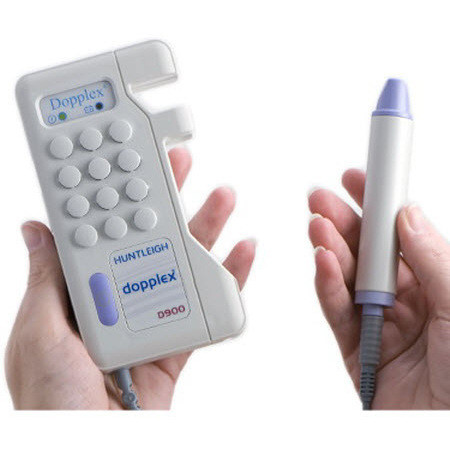
The Arjo Xs Probe is a versatile diagnostic tool ideal for both prenatal monitoring and vascular assessments. Designed to cater to a broad spectrum of medical needs, this probe features different frequencies tailored for specific applications. With 2 MHz and 3 MHz frequencies dedicated to fetal heart detection, it plays a crucial role in prenatal care, ensuring accurate and reliable readings for expectant mothers.
Additionally, the probe supports various vascular applications with frequencies ranging from 4 MHz to 10 MHz. Whether it’s assessing very superficial, peripheral, or very deep vessels, the widebeam XS design ensures enhanced sensitivity and precision. Its compact, user-friendly design allows healthcare professionals to perform examinations efficiently in both clinic and hospital settings. Robust and durable, this probe is built to endure regular use, making it a trusted component in any medical toolkit.
The Arjo Xs Probe is a versatile diagnostic tool ideal for both prenatal monitoring and vascular assessments. Designed to cater to a broad spectrum of medical needs, this probe features different frequencies tailored for specific applications. With 2 MHz and 3 MHz frequencies dedicated to fetal heart detection, it plays a crucial role in prenatal care, ensuring accurate and reliable readings for expectant mothers.
Additionally, the probe supports various vascular applications with frequencies ranging from 4 MHz to 10 MHz. Whether it’s assessing very superficial, peripheral, or very deep vessels, the widebeam XS design ensures enhanced sensitivity and precision. Its compact, user-friendly design allows healthcare professionals to perform examinations efficiently in both clinic and hospital settings. Robust and durable, this probe is built to endure regular use, making it a trusted component in any medical toolkit.
1. What are the primary uses of the Arjo Xs Probe?
The Arjo Xs Probe is primarily used for fetal heart detection and a variety of vascular assessments, including very deep, moderately deep, peripheral, and superficial vessels.
2. How does the frequency variation affect its application?
Different frequencies, such as 2 MHz and 3 MHz, are optimal for fetal heart detection, while others like 4 MHz, 5 MHz, 8 MHz, and 10 MHz are suited for vascular applications.
Similar products to the one you are viewing.
 Similar Product3 variants
 Similar Product28 variants
 Similar Product12 variants
 Similar Product
 Similar Product9 variants
 Similar Product25 variants
 Similar Product13 variants
 Similar Product2 variants